

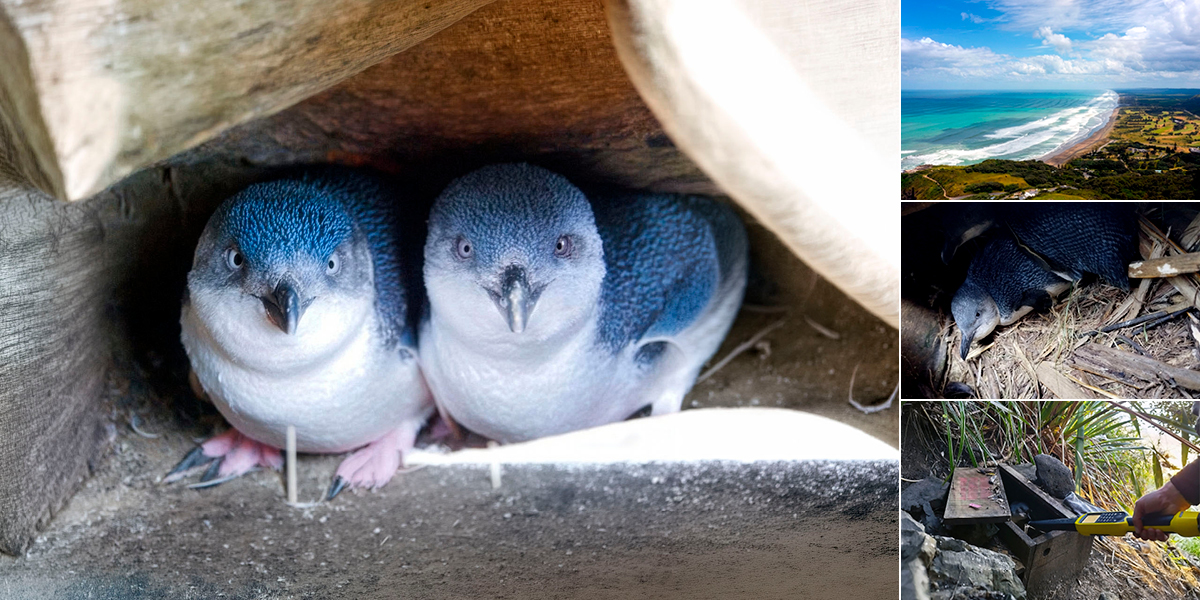
A tagging programme for kororā (little blue penguins) has commenced on the west coast of Auckland, New Zealand, highlighting how RFID technology – commonly used with livestock and companion animals – can enable better informed decisions in different species in the wild to aid conservation.
The kororā penguin is native to New Zealand. Considered the world’s smallest penguin, their species population has significantly declined in recent years as they face growing threats from marine heatwaves, predators and roaming dogs, as well as habitat loss driven by coastal development and climate change.
The Muriwai Environmental Trust is a community-led organisation dedicated to conserving and enhancing the unique natural environment of Muriwai on Auckland’s west coast, and its surrounding areas. Through practical conservation initiatives, education, and collaborative projects, the Trust supports sustainable ecosystems that benefit both people and nature, ensuring that Muriwai’s landscapes and wildlife thrive for generations to come.
For more than 10 years, the Trust has been working to restore and protect kororā habitats around the Muriwai area. However, there has been little information available on the colony’s population dynamics, making it difficult to understand how it’s changing over time. This information is vital to help inform the right conservation actions.
After careful consideration and expert advice, the Trust made the decision to use RFID tagging technology to enable them to glean valuable data on the penguins. As kororā are a protected species, the Trust worked closely with the Ministry for the Environment and underwent community and iwi (local indigenous group) consultation to secure the necessary permissions and social licence ahead of commencing tagging.
Datamars has supported the penguin programme by donating a Tru-Test EID stick reader, enabling the Trust to monitor the tagged penguins in a non-invasive way. The reader helps teams collect information on the penguins, so they can make better informed conservation decisions, all while minimising disturbance for this sensitive species.
Richard Wright, Chairman of the Muriwai Environmental Trust says: “Being able to scan RFID-tagged kororā means we have access to a wealth of information about our west coast populations. Over time, the data will help determine chick survival rates, nesting behaviour, movement between colonies, breeding success and even identify “super breeders” that may need special care.
“The donation of a Tru-Test stick reader by Datamars has made a big difference to our ability to conserve this very special population of kororā and improve the monitoring of the health of our colony.”
Adriane Zart, Global Technical Marketing Manager for Datamars says:
“Datamars is proud to play a small but vital role in assisting the Muriwai Environmental Trust as they work to safeguard the future of the kororā.
“A big part of Datamars’ business is in the agri sector, and we know that supporting resilient ecosystems and communities matters. Healthy biodiversity and sustainable farming systems are closely linked, and technologies that improve how we monitor, understand, and care for animals can contribute to both. Datamars RFID solutions are used around the world in livestock, companion animal and textile solutions – and it’s always great to see the technology being applied wider, with the same goal – to empower people with data to make better informed decisions”