From watching cows to understanding the herd
Active Tag continuously monitors behaviours including rumination, feeding, activity and resting. Georgia quickly found that some of the most valuable insights weren't coming from individual cow alerts. They were coming from patterns across the herd.
By looking at feeding and rumination together, her team could see how cows were responding to changes in pasture and nutrition. When those patterns shifted, it was a signal to investigate. Was pasture availability changing? Had forage quality dropped? Did the ration need attention?
Instead of waiting for a drop in milk or an obvious health problem, the team had an earlier indication that something wasn't quite right. It created a simple but important shift: see the change, investigate the cause and act before it becomes a bigger problem.
When 30 minutes shows up in the milk tank
Georgia also started comparing behavioural trends with milk production. The farm observed that an increase of around 30 minutes in average daily group rumination correlated with approximately 0.5 litres more milk per cow per day. Across 500 cows, small behavioural changes suddenly didn't look so small.
During peak spring, keeping rumination consistent became a key focus.
"During the peak of spring, we became really obsessed with keeping rumination constant, because it translated directly into results. It meant more litres of milk in the tank."
The collars weren't simply showing what the cows were doing. They were helping Georgia understand how management decisions were showing up in herd performance.
The cows can tell you how the farm is running, too
Then things got even more interesting. Georgia began using group activity, standing and lying patterns to understand what was happening across the wider operation.
Unexpected changes helped identify water supply problems or broken troughs, delays in milking routines, more animal movement than expected and even unusual night time activity, including attempted intrusions and cattle theft.
The same technology purchased for heat detection had become another set of eyes across the farm, 24 hours a day. For Georgia, that means greater visibility not just of the cows, but of whether daily routines are happening as planned.
"Heat detection is probably the least interesting thing the collar does. It's everything else that really matters.
"It's incredible how many things the collars tell me that have nothing to do with health or reproduction. They show me how the entire operation is functioning."

Less reliance on who happens to be watching
That's perhaps the bigger lesson from Agrícola Dos Kiwis. Good farmers will always use experience and observation. Technology doesn't need to replace either. But a farm shouldn't have to depend on one person being in the right place at the right time, or carrying years of knowledge in their head.
Georgia originally needed a way tomaintain the heat-detection expertise her mother had built over years. ActiveTag helped make that knowledge more scalable. Now she's applying the samethinking more broadly.
Instead of relying solely on someone noticing a change, the team has continuous data to help identify where attention is needed. Instead of debating whether a management change worked, they can look at how the herd responded. And instead of discovering some problems after performance has already been affected, they have an opportunity to act earlier.
It gives people better information to bring to the decisions they're already making.
Heat was the starting point. Not the destination.
Georgia is now an advanced Active Tag user, continually finding new ways to apply behavioural data across reproduction, health, nutrition and farm management. Her experience is a good reminder that the value of monitoring isn't simply in collecting more data. It's in seeing something you couldn't see before and knowing what to do next.
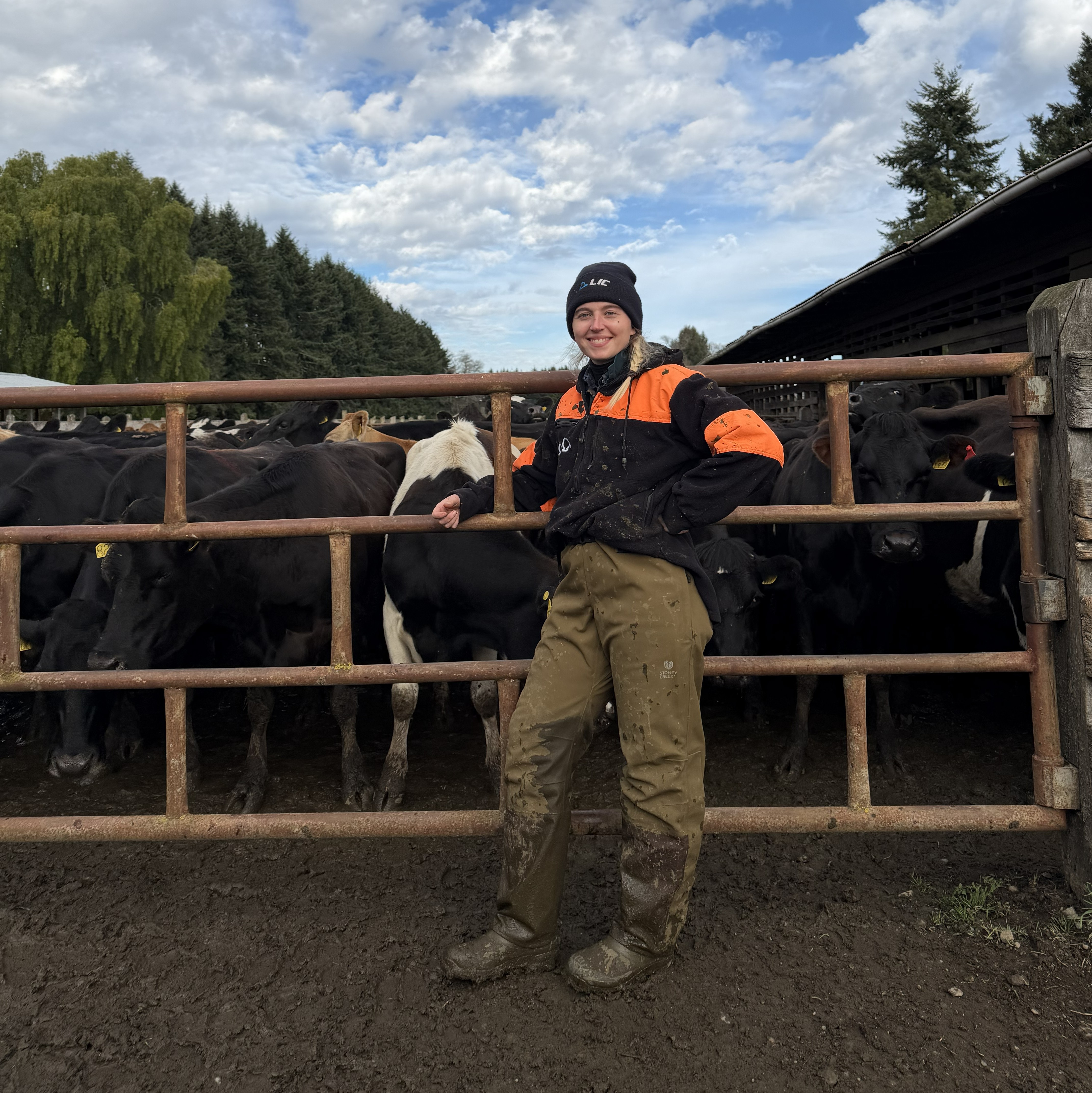
To learn more about Georgia and Agricola Dos Kiwis, take a look at the September edition of NZ Farmer here.
%2C%20Sue%20Connolly%20(C)%2C%20Georgia%20(R)1.jpg)